Flash USDT Creation Method Using ChainIDE and MetaMask
· based on the channel Rca FastPrint
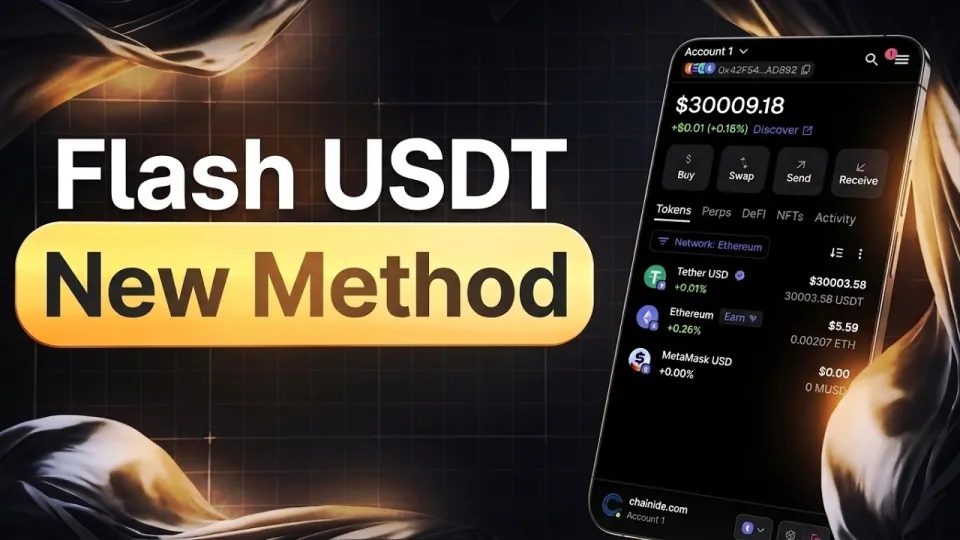
Video: I Found a NEW Flash USDT Method on ChainIDE…
Flash USDT is a concept involving the creation of USDT-like tokens using smart contracts on blockchain platforms, particularly Ethereum. The new method to create Flash USDT tokens leverages ChainIDE, an integrated development environment for blockchain, and MetaMask, a popular Ethereum wallet, to deploy and interact with these tokens.
Understanding Flash USDT
Flash USDT refers to tokens that mimic the Tether (USDT) stablecoin, generated through custom smart contracts rather than centralized issuers. This approach allows developers and users to create their own ERC20-compliant tokens that resemble USDT for educational, testing, or experimental purposes. The tokens follow the ERC20 token standard, ensuring compatibility with Ethereum wallets and decentralized applications.
Setting Up ChainIDE for Flash USDT Development
ChainIDE (https://chainide.com/) is a cloud-based blockchain development environment that supports Solidity programming and smart contract deployment. To create Flash USDT, you first register or log in to ChainIDE. Then, you set up a new Solidity project where you write or import the Flash USDT smart contract script. The script defines the token’s parameters such as name, symbol, decimals, and total supply.
Writing and Deploying the Flash USDT Smart Contract
The Flash USDT smart contract is structured based on the ERC20 standard, which includes functions for transferring tokens, approving allowances, and querying balances. After preparing the contract code in ChainIDE’s editor, you compile it to check for syntax errors. Once compiled successfully, you connect MetaMask to ChainIDE to deploy the contract on the Ethereum network (or a testnet).
MetaMask acts as the wallet interface, managing your private keys and signing transactions securely. During deployment, MetaMask prompts you to confirm the transaction and pay gas fees required by the Ethereum network. After deployment, the contract address is generated and can be used to interact with the Flash USDT token.
Interacting with Flash USDT Using MetaMask
After deployment, you can add the Flash USDT token to your MetaMask wallet by entering the token’s contract address. This allows you to view the token balance and perform token transfers. MetaMask also facilitates interaction with the smart contract’s functions such as approving spending limits or querying total supply.
It is important to verify the contract address and source code before interacting to avoid scams or errors. Since Flash USDT tokens are not official USDT, they carry no guaranteed value and should be used only for development or testing.
Testing and Verification Best Practices
Before using Flash USDT tokens in any live environment, thorough testing is essential. Use Ethereum test networks like Ropsten or Goerli to deploy and interact with your smart contract without risking real funds. Verify the contract by reviewing its source code, ensuring no malicious functions are present.
Common mistakes include deploying contracts with incorrect parameters, interacting with unverified contracts, or sending real funds to experimental tokens. Always double-check network settings in MetaMask and confirm transaction details.
Security and Ethical Considerations
The Flash USDT method is intended for educational and development purposes only. Creating tokens that mimic USDT or any other stablecoin can be misleading if used for fraudulent activities. Never send real cryptocurrency to unknown contracts and always exercise caution when handling smart contracts.
Useful Links
- ChainIDE platform for blockchain development: https://chainide.com/
- Flash USDT smart contract script and instructions: https://sites.google.com/view/defiflashusdt
Итог
The Flash USDT creation method demonstrated by the Rca FastPrint channel offers a clear, step-by-step guide for developers interested in ERC20 token creation using ChainIDE and MetaMask. This approach is valuable for learning smart contract development and token management without relying on centralized issuers. Always prioritize testing on networks without real funds and verify contract details before use. To explore and start building your own Flash USDT tokens, visit the ChainIDE platform here.
Key takeaways
- Flash USDT tokens are created via smart contracts on Ethereum using ChainIDE.
- MetaMask integrates as a wallet for deploying and interacting with Flash USDT.
- The method involves ERC20 token structure and smart contract scripting.
- Testing and verification are critical before deploying or transacting with Flash USDT.
- This approach is educational and should not be used with real funds without due diligence.
Source: I Found a NEW Flash USDT Method on ChainIDE… · Markdown version
Questions & answers
What is Flash USDT and how does it differ from official USDT?
Flash USDT is a token created via custom smart contracts following the ERC20 standard, mimicking USDT but not issued by Tether. It is primarily for educational or testing purposes and has no official backing or value guarantee.
How do I use ChainIDE to create Flash USDT tokens?
You use ChainIDE to write, compile, and deploy Solidity smart contracts that define the Flash USDT token. After coding the ERC20 contract, you deploy it on Ethereum (or a testnet) with MetaMask integration.
Is it safe to interact with Flash USDT contracts?
Interacting with Flash USDT contracts is safe only if you thoroughly verify the contract source code and use test networks. Avoid sending real funds to unknown or unverified contracts to prevent loss or scams.
Can I use Flash USDT tokens for real transactions?
No, Flash USDT tokens are not official stablecoins and do not hold real-world value. They are intended for development and testing, so they should not be used for actual payments or trading.